The machine learned from us. But nobody asked.
I spent twenty years deciding who gets through a door, and a lifetime being the artist told to wait outside. DOOR is what I built with both. Artists are asked first, credited permanently, and paid on every use — not a promise in a policy, a receipt in the file.
Not a feed. Not a marketplace. A threshold.
DOOR is a consent-native platform for AI art and storytelling. An artist decides what enters, what it may become, and what it may never be used for — before a single stroke is captured. Nothing assumed, nothing scraped. The artist holds the keys and the provenance. DOOR is not the centre of the story; the artist is.
All four, or the door doesn't open.
Not features we added. The conditions the architecture starts from.
Consent is the floor, not a checkbox at the end. The terms are set before anything is captured.

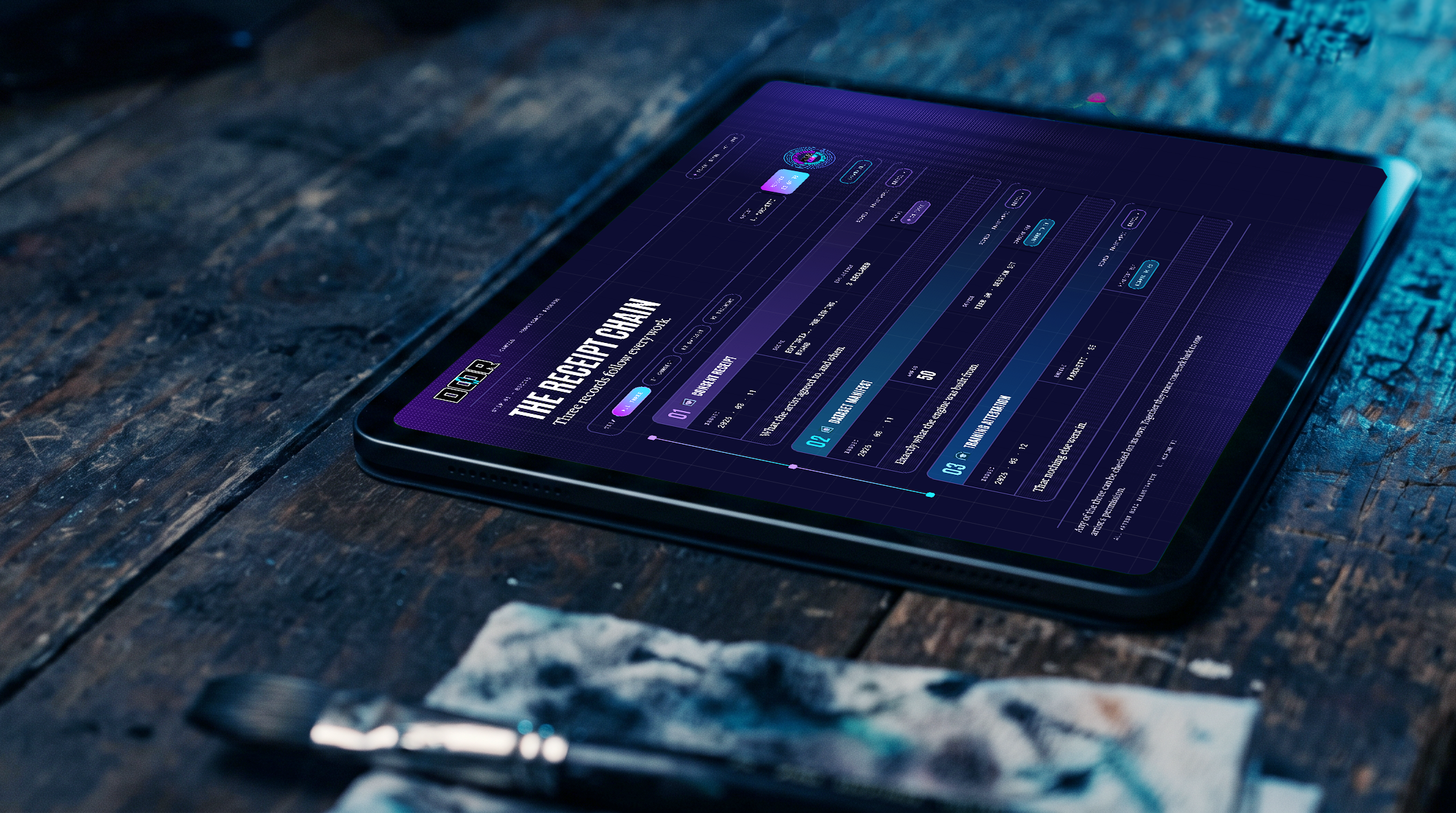
Three receipts follow every work — the consent receipt, the dataset manifest, the training attestation. Signed, timestamped, and independent of us.
We don’t sell the recipe, we serve the meal. Nobody downloads an artist and runs them locally. An artist can always take their own model and their own provenance and walk — nobody else can.
Artists are paid for what their work does, above a floor, with a live view of what drove the number. Not a quarterly statement they have to take on trust. Money moves Studio → DOOR Global → Artist.
Take one away and it's the old deal with better graphics.
How a work gets signed.
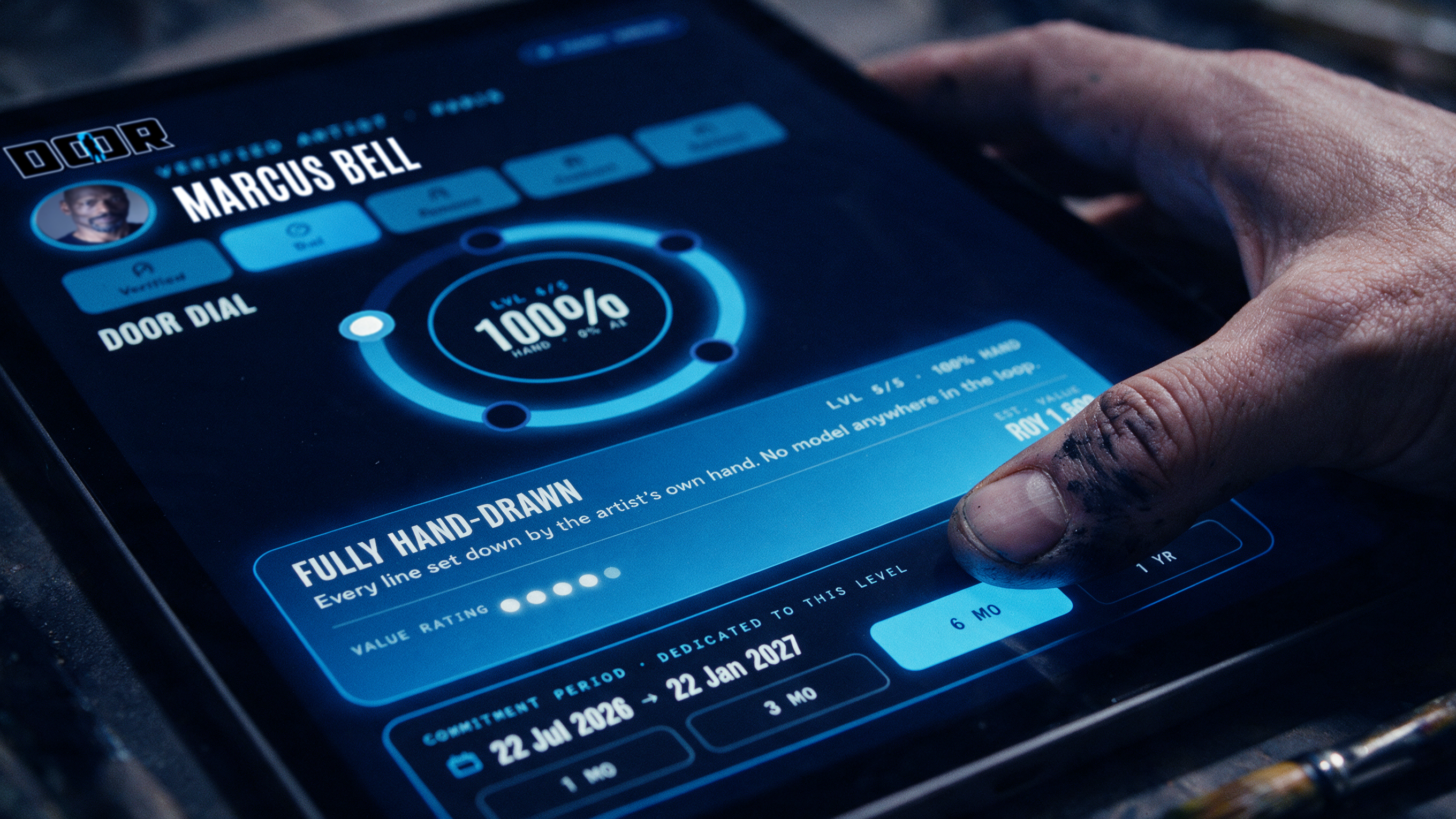
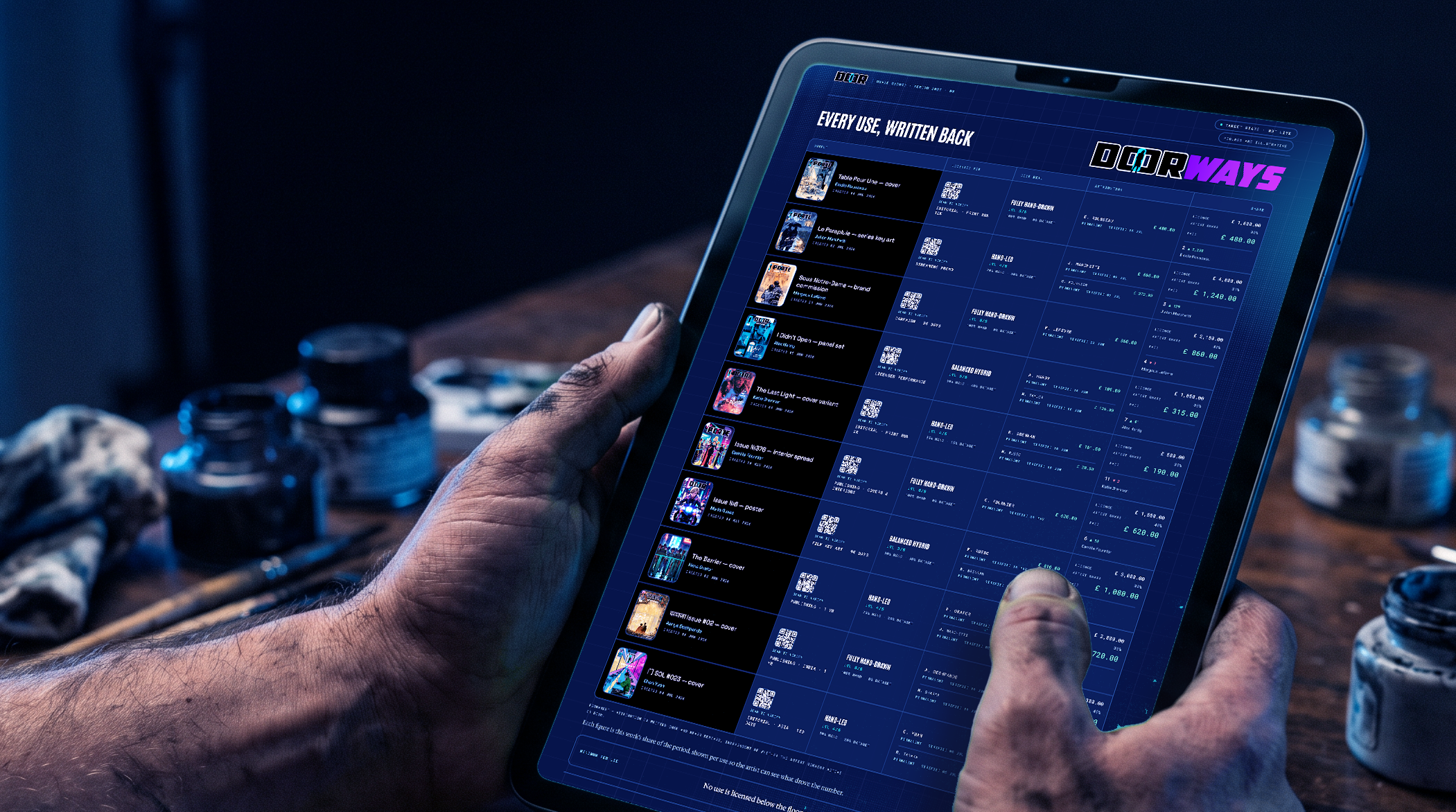
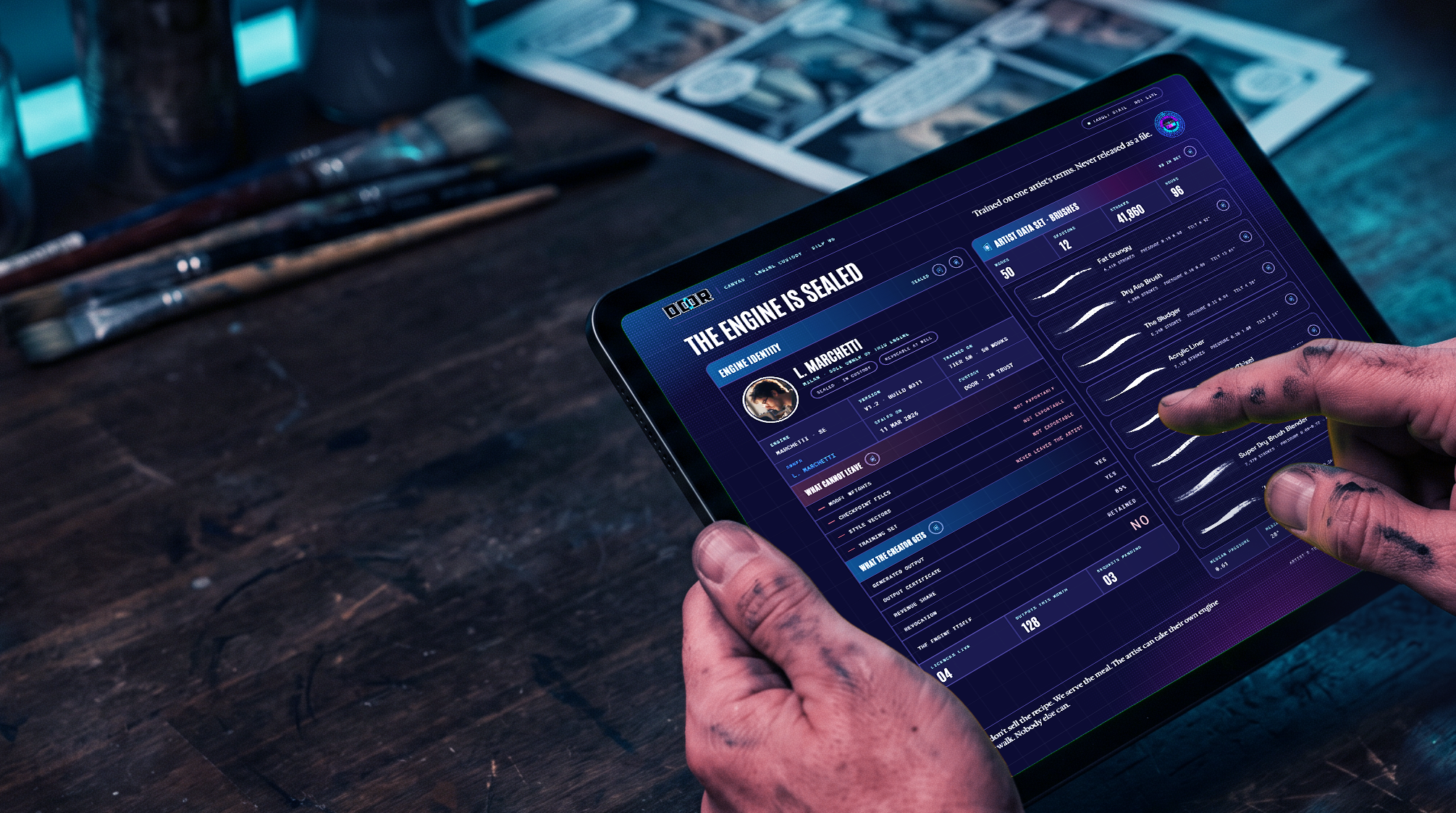
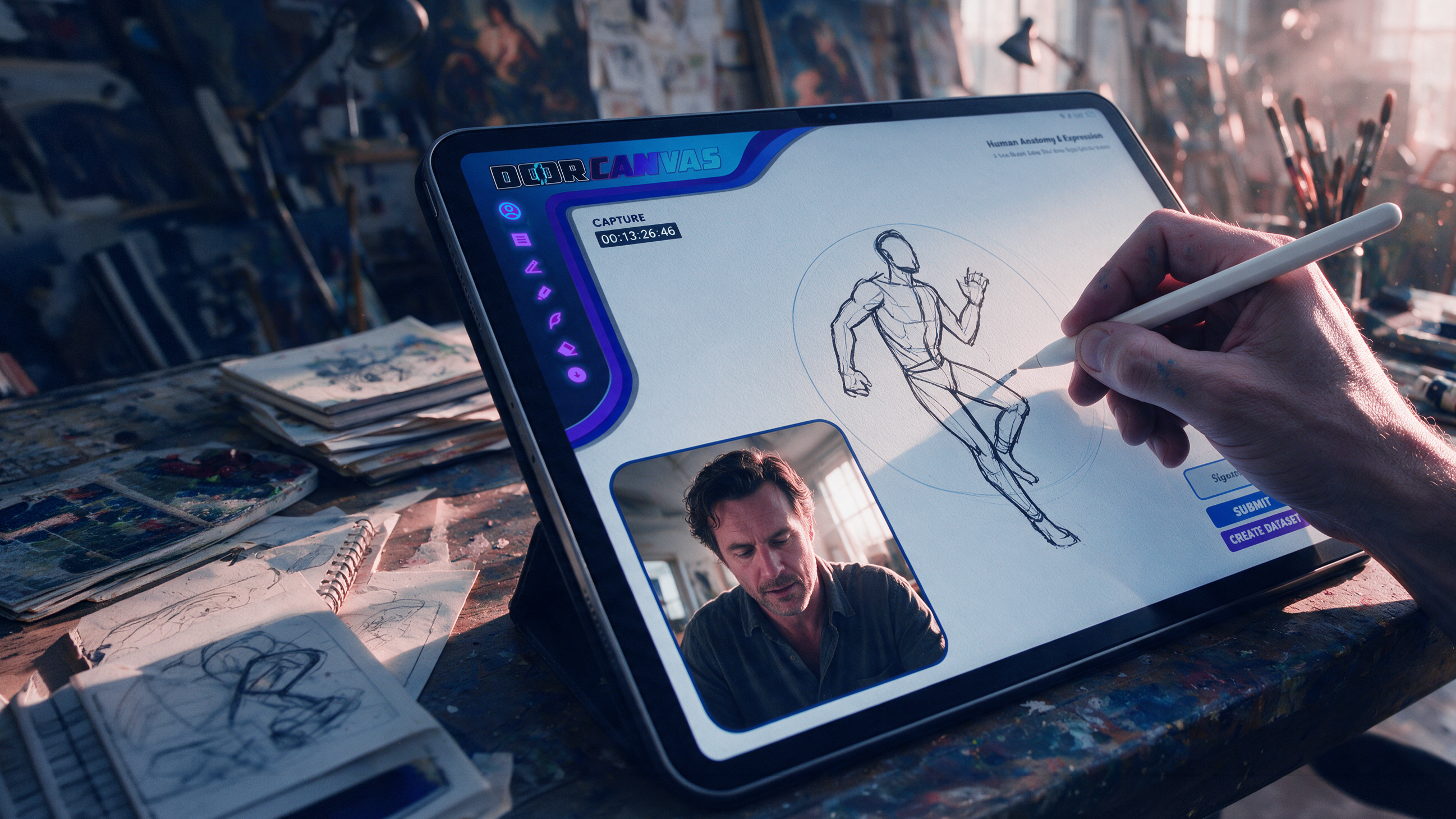
The artist defines scope, permitted uses, and hard exclusions. Nothing proceeds without it.
The drawing is recorded as it happens — the strokes, not just the picture. The artwork stays with the artist. Only the proof travels.
Consent receipt, dataset manifest, training attestation — signed and timestamped.
On that artist's terms only, and never released as a file anyone can take away.
Each output is written against the artist who made it possible, and pays them.
Three ways through.

If you poured yourself into the work instead of the feed, DOOR was built for you. Bring your terms — that's where it starts.
Request a door →
You have stories to tell, and the right to own them. DOORWAYS is where creators tell them long-form and keep the intellectual property — yours, on the record.
Creator enquiry →
The architecture is documented in the open, so anyone serious about paying artists can adopt it rather than rebuild it.
Partner enquiry →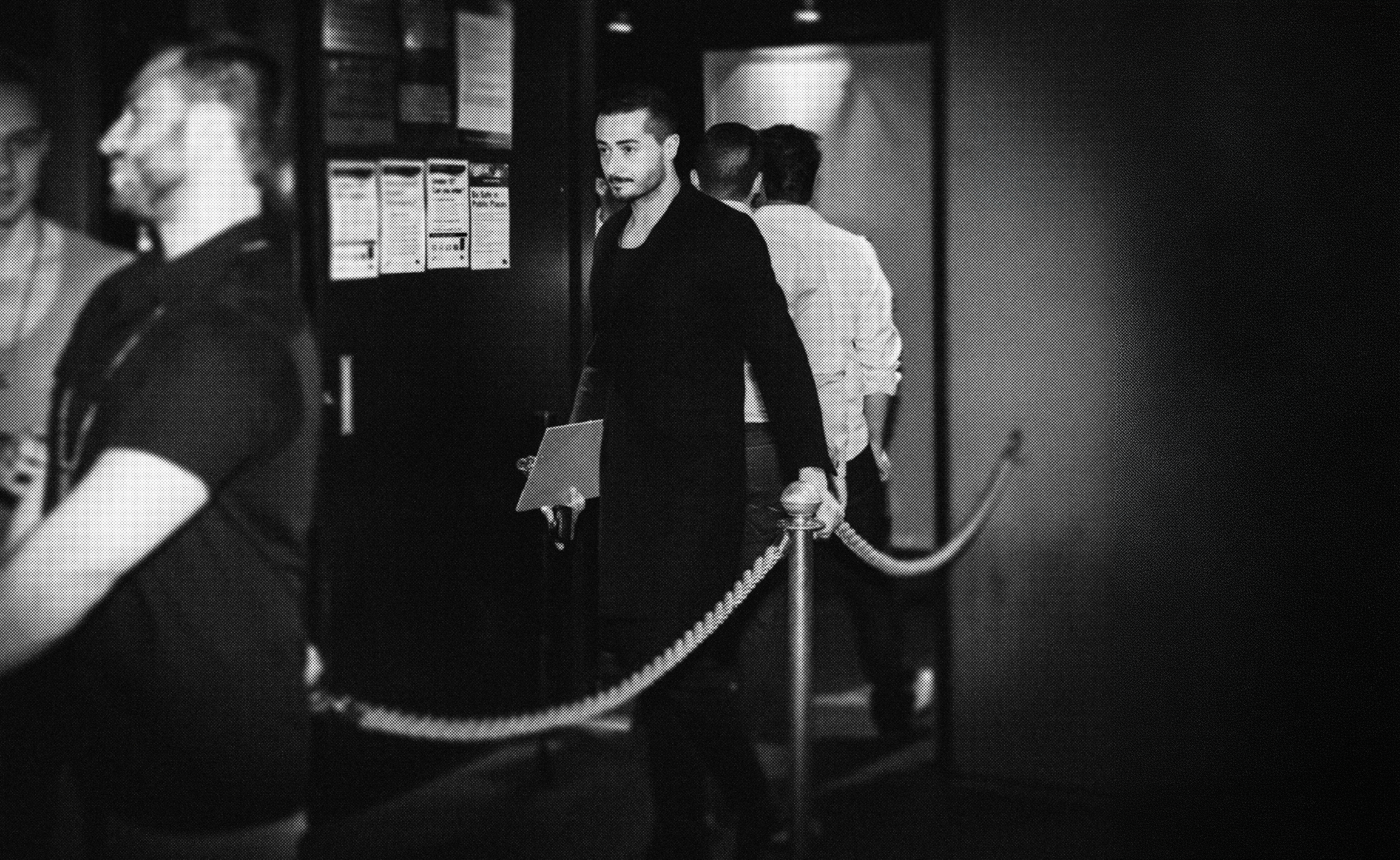
I know what a threshold is worth.
Thirty-plus venues across the Melbourne CBD. Twenty years on the rope, reading faces and deciding who came in and on what terms. By day I was the other person — the actor, the illustrator, holding the work and waiting on somebody else's decision. Both sides of the same door.
Then AI arrived and walked through artists' doors without knocking. Styles scraped. Hands imitated. Consent treated as optional, apologies afterward, if at all.
Here's the part most platforms won't say out loud: it already happened. We already let them in. The models exist, they're trained on the collected work of millions of us, and no amount of objecting untrains them. DOOR is built on that ground because it's the only ground there is.
So the question isn't whether it should have happened. It's whether artists get a structure that names them, pays them and lets them say no — or whether it carries on without one.
I'm not a techbro. I'm the guy who worked at the door — which means I know exactly what happens when whoever's holding it forgets they're in service of the people passing through.